NIV/NIPPV

Already updated since first posting!!!

So many acronyms…

Non-Invasive Ventilation (NIV) and Non-Invasive Positive Pressure Ventilation (NIPPV) are some of the more advanced respiratory interventions being provided to some patients who experience COVID-related and non-COVID-related ARDS. These interventions are pretty much what they sound like: mechanical ventilation is provided to the patient with or without positive pressure without the process of intubation to maintain the airway.

This advanced intervention is utilized in patients where ARDS has not progressed to the severe stage, but the patient is not progressing or stabilizing on just supplemental oxygen alone. This may seem WAY OUT OF YOUR LEAGUE. But its not! PTs in other countries are providing support to their respiratory and physician colleagues by providing these interventions to patients. If your interest is piquing, Italy is leading the way.

Some states, like Michigan, have opened up the scope of practice lines to allow PTs to function essentially as respiratory therapist extenders, where we can provide advanced respiratory interventions under the guidance of our more familiar interprofessional colleagues. There are, of course, some PTs who are probably more familiar than others, but for those that are not, you can do this with help. Even though I currently practice and reside in Texas, I am from Michigan, as are many of my colleagues. I hope this blog is helping some of you up there!

image

So, for NIV, pressurized air with supplemental oxygen is provided both during inspiration and exhalation. Typically, during exhalation there is little to no pressure. The goal of this is to support the patient’s natural inspiratory efforts and decrease the work of breathing, but a small amount of PEEP may be provided. NIV should also reduce the need for intubation if it is successful at stabilizing ventilation and diffusion. NIV can be used acutely (such as in the case of COVID-19 and other ARDS generating conditions like COPD exacerbations), but can also be used chronically, similar to a CPAP.

As you can see in the picture, a nasal mask can be used, but you can also provide NIV via nose/mouth mask, face shield, or even a helmet! There are several different options for machinery that can provide this support. The difference between a CPAP and NIV (also known more commonly as BiPAP) is that CPAP provides a single expiratory and inspiratory pressure, whereas NIV provides differing inspiratory and expiratory pressures.

There are contraindications and relative considerations for use of NIV, so please do your research. Active ventilator-associated pneumonia or undrained pneumothorax are good reasons to stay away. However, I know with COVID-19, at some point it comes down to a risk/benefit analysis with risk being death and benefit being maybe less death. If successful, there is decreased mortality with this intervention in comparison to mechanical invasive ventilation.

NIV and COVID-19

We need this in COVID-19 because the damage to the pneumocytes in the lungs due to viral overload may prevent diffusion of CO2 from the blood stream to the alveoli, preventing CO2 removal. Poor oxygen diffusion happens simultaneously due to the same alveolar destruction. Therefore, respiratory support efforts are needed for BOTH inspiration (IPAP) and exhalation (EPAP) which results in BiPAP.

We have talked in previous posts about methods of hyperinflation that can be used to recruit under-inflated airways such as glossopharygeal breathing. The purpose of using NIV is basically the same. Keep airways open and improve gas exchange. More oxygen in AND more CO2 out.

We have also talked about providing positive expiratory pressure using different devices and techniques to increase small airway expansion and inflation for the exact same reasons. NIV can be modified to allow for the addition of positive pressure to achieve these exact same things. This is called NIPPV. This intervention can be provided at the same time as supplemental oxygen and airway support and decreased effort of breathing. Man, I’m really wishing I had one of these in my trunk right about now for all those home care visits!

So the whole point of all of this is to reduce need for invasive ventilation because of the demand it places on the medical unit and it’s personnel as well as the detriment it can result in for the patient. According to many docs and RTs, it’s succeeding!

Image capture

Most of you have seen CPAP or BiPAP machines so don’t be intimidated. I used to futz around with mine all the time. They are typically set at a certain pressure setting (or settings if BiPAP) and they can’t be modified without a RT or a physician making changes via a computer system. So you really can’t screw it up. In the acute care setting, you will probably have a lot more access, so take care and consult your team.

Here is a great video on how to set up NIV, in case you need a crash course.

This is such a great opportunity to reclaim some of our practice that we gave so little focus to prior to this pandemic. As this is my favorite practice area, I’m excited for the opportunity and I hope you are, too!


Respiratory therapists are out there literally saving lives and I love the chance to help them do that! Tell me about your favorite experience working with a Respiratory Therapist in the comments!

More form the Pulmonary Rehab Toolbox

Something went wrong. Please refresh the page and/or try again.

Follow @DoctorBthePT on Twitter for regular updates!

Layers of Grief


Time for something a little bit different.

We’ve been Staying Home, Staying Safe for a while now, some longer than others. People outside of the medical world have been starting to wonder what kind of effects this may have on those who have pre-existing mental health issues. People inside the medical world have been seeing the issues almost from the start. Especially in the long-term care setting where I currently work, the residents are feeling the pains of loneliness, isolation, and depression. My friends and family are starting to experience difficulty getting to sleep and staying asleep and many are feeling the weight of anxiety. There is profound discussion regarding what life will be like when this is over. Will we ever return to normal? Do we WANT to return to normal? Do we need to create a new normal?

These, my friends and colleagues, are the effects of grief. Many mental health experts have been talking about this for months, but it has become clear to me that the people outside the medical world are experiencing these things and don’t understand what is happening to themselves. If that’s true, which I believe it is because I’m experiencing it in the people I know, then the providers in the medical world have been feeling it even longer and harder. Our roles have been drastically changing, our workload is heavy, and our souls shoulder the burden. So let’s put this out there and give it a name.

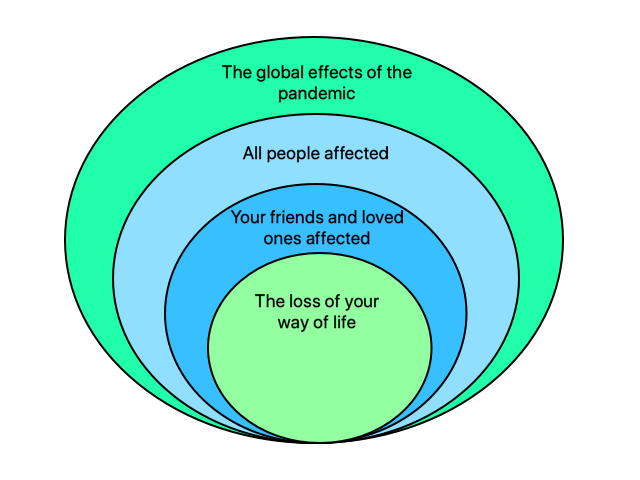
Brockway, K. (2020). Layers of Grief.
(Original Image)

I’m going to go all Shrek and Donkey on you. Grief comes in layers and you have to peel them back one at a time. You may have more layers than my onion pictured here, and you may have fewer layers. You may experience each of the layers differently from each other. The Stages of Loss: denial, anger, bargaining, depression, and acceptance, don’t necessarily happen in the same order and they are not always a linear path.


Unfortunately, we can’t “Marie Kondo” grief.

You, your family members, your friends, and your patients are likely experiencing grief. This grief is interrupting your sleep, your joy, and pretty much every part of your life. We are all feeling it, and the pressure of the outside layers are crushing down on the core. Don’t feel guilty for grieving the loss of your way of life.

You must allow yourself to grieve in order to move on. And we have to encourage our patients to do the same. Normalize their grief by sharing that you are feeling it, too. The life we once knew is gone. We know we cannot go back. We have seen far too much. It’s not just our lives that have changed, WE have changed.

And beyond grief, some of you may feel betrayed. You have been working so hard to keep yourself safe, your families safe, and your patients alive. You have been holding phones and iPads for loved ones to say goodbye. And you have been seeing all the talk about re-opening our economy, letting everyone commune to create herd immunity, and so many other posts.

“It’s amazing to me that you can see all these nurses and frontline workers saying, ‘I won’t work without PPE, my job isn’t worth my life.’ Yet so many nonessential workers think their jobs are worth hundreds of lives.”

You feel betrayed by family members, friends, employers, governing bodies, and communities as a whole. You can’t believe there are still people who don’t believe this is real. And then you circle back around and you grieve for those people. You grieve for the people’s lives they are risking, including their families, when you maybe haven’t seen your family in weeks.

On the other side, you may just feel ready for everything to open back up and restart your life and the lives of everyone else around us. You may be aching to get in some serious shopping or to get your kids to the playground. You may just really be missing your people. You may be watching your friends and family members suffer with business closures and financial hardships. But, because opening back up isn’t really happening, you are grieving that too, for yourself and for you family and friends.


But… How? How can we escape this?

Escape is not the goal. What we can do is create a new, better life. One that has the hope of fixing all the mistakes we made in the last one. Everyone is coming out of this changed and with a completely new outlook on what life can be. This is a critical time. YOU have the ability to reframe absolutely everything. Experience your grief, but don’t frame your life in it. Frame your life in hope. This is your chance.

The best quote I’ve heard so far about when this will all end was from Dr. Fauci, “The virus is the clock.” So we can’t escape it, at least not on our own terms. We have to learn to live within it. We have to reframe what we have. You get the chance today to choose your frame. I hope you choose something like peace, or happiness, or service.


Don’t focus on what you can do, focus on HOW you can do it.

I’m choosing service. That’s what this whole blog is about. How can I help as many rehab providers as possible deal with this, be ready for this, and be helpful to their patients? Well, I have a skillset that most PTs haven’t used in a while, so I can help them refresh their skills so they can be ready to provide the help needed by patients who have COVID-19. I can reach as many people as possible using a blog and sharing it everywhere I can.

If you focus on what you can do, you’re going to hit a lot of roadblocks. There are many barriers to break if you just try to figure out what you can do. It is also very easy to get overwhelmed focusing in on all the things you CAN’T do. Skip the what, because, let’s be honest, you already know what you need help with. You think about it all the time (I just need one more cup of coffee…). Instead think about HOW you can do something. How you can support a friend or coworker or how you can help yourself and your colleagues get through another shift (donuts?).

When you focus on the how, you get to push right past all that barriers and roadblocks and just DO something. And being able to do something feels good. That’s where you start your reframing process.


Tell me in the comments what frame you are choosing!

More reads…

Pressure… Pushing Down On Me…

Breathing. I can’t stress it enough. If you’re not breathing, you’re dead… or in a lot of pain… either way, it’s not good. So breathe! In my practice, I work with a lot of different types of patients with a wide variety of conditions and comorbidities, but they all have one thing in common: they…

Dehydration

WHILE WE WAIT FOR THE NECT CHAPTER OF DIABETES MANAGEMENT, LET’S KEEP TALKING ABOUT INCONTINENCE

Chronic management of urinary incontinence can lead to many issues like infection and hospitalization if it doesn’t account for fluid balance! Let’s talk I’s and O’s! #physicaltherapy #incontinence #chronicdisease

Something went wrong. Please refresh the page and/or try again.

Follow @DoctorBthePT on Twitter for regular updates!

Reference

Berinato, S. (2020). The discomfort you’re feeling is grief. Harvard Business Journal. Retrieved from https://hbr.org/2020/03/that-discomfort-youre-feeling-is-grief

Acute Respiratory Distress Syndrome (ARDS)

UPDATED

This is a pretty hot topic lately. the presence of the acronym has increased exponentially all over the internet and media. Prior to two months ago, I’m betting you didn’t really think much about ARDS, but now I feel like I hear about it daily. Of course, my research direction definitely influences that. But so many topics I typically research or think about in my practice are becoming regular conversation topics these days.

ARDS has been so hot because it is the medical presentation we are hearing about with patients with COVID-19 that is resulting in need for critical and intensive care of otherwise healthy individuals.

ARDS comes in three sizes:

  • Mild (PaO2/FiO2 200-300 mmHg)
  • Moderate (PaO2/FiO2 100-200 mmHg)
  • Severe (PaO2/FiO2 <100 mmHg)

Clinically, you may see supplemental oxygen, NIV or HFNO, and mechanical ventilation utilized respectively at different levels of this diagnosis. For more about what those PaO2 measurements mean, check out this post.


What the heck do those numbers mean?

Just a reminder, SpO2 and PaO2 are not the same. See this article for more info on that.

FiO2 is the fraction of inspired oxygen. In room air, it is 0.21. That means that the normal room air we breath is about 21% oxygen. We modify this by adding supplemental oxygen which can increase the FiO2 up to 100%.

PaO2 is the partial pressure of oxygen in arterial blood. This is measured by ABG (arterial blood gases). Normal PaO2 is 80-100 mmHg.

So if we take what we now know, we can look at an example:

If your patient has an FiO2 of .21 (room air) and their ABGs are showing a PaO2 of 100 mmHg, 100 / .21 = 500 mmHg. This is a great number and you can see that this patient would not be considered in respiratory distress.

If you patient is on FiO2 of 0.6 and their ABGs are showing a PaO2 of 80 mmHg, 80 / .6 = 133 mmHg. This person would be in moderate respiratory distress even though they are already on supplemental oxygen and their PaO2 is technically in the normal range. They would probably need an increase in their FiO2 (provided by supplemental oxygen, NIV, or mechanical ventilation) to improve their situation.


What can we do about all these things?

The reasons we are so concerned about our patients having ARDS doesn’t stop after they are extubated. ARDS comes with a pretty heavy list of possible sequelae. When patients with COVID come home, we need to incorporate the risks of these sequelae in to our assessment and intervention process.

  • Long term pulmonary function impairments
  • lasting physical deficits
  • debility/long term strength deficits
  • poor emotional well-being
  • increased risk of heart disease, kidney disease, and strokes
  • Fatigue (about 70% of patient who experienced ARDS reported significant fatigue up to a year later)

So, if your patient is coming home after a diagnosis of ARDS or Acute Respiratory Failure (ARF), you need to be on the look out for other symptoms. Especially if your patient has other comorbidities, like COPD, you need to be thinking long term. You also need to look for places you can intervene! Look at that list. There are several places where expertly prescribed exercise can make a difference. You can get more information on the details of these deficits here!


What can we do about all these things?

Pulmonary rehab is more than just breathing exercises. Aerobic activity is one of the most powerful tools we have in pulmonary rehab and in physical therapy as a profession. Aerobic activity can impact debility, strength deficits, mental well-being, and risk of heart disease, just to make a few that are on the list!

I tend to utilize HIIT protocols for my patients that are tailored and customized to their specific level of function. HIIT has evidence to suggest that patients hate it less than continuous exercise, patient show improved compliance over the long term, and it invokes physiological and anatomical changes that improve the function and efficiency of the cardiac, pulmonary, and renal systems!

Why not work smarter and target all the affected systems simultaneously to improve their overall function? You can incorporate resistance training, reconditioning, and target specific deficits all at the same time! Customized HIIT programs are my choice intervention. And just because it’s high-intensity, doesn’t mean it’s too difficult. It’s really the alternating interval intensities that make these programs completely individualized and meet the patient at their current level. So you can apply these same concepts with lower level patients using lower level intensities.


Leave me a comment below telling me how you think “long term” for patients with pulmonary diagnoses!

Follow my blog for more!

More from the Pulmonary Rehab Toolbox…

CO2 Retainers

MORE BONUS CONTENT! Getting sciencey now! The science behind COPD and oxygen to help lead you right!

Something went wrong. Please refresh the page and/or try again.

Follow @DoctorBthePT on Twitter for regular updates!
References

Tepper, S., Wruble, E., Stewart, E. (2020). Anatomy, histophysiology, and pathophysiology of COVID-19. Pacer Project. Retrieved from https://YouTube.be/w7bafww8IWo

Neufield, K. J., et al. (2020). Fatigue symptoms during the first year after ARDS. Chest. pii: S0012-3692(20)30686-3. doi: 10.1016/j.chest.2020.03.059. [Epub ahead of print]

Bauer, N., & Bartlo, P. (2020) Pulmonary Rehabilitation Post-Acute Care for COVID-19. PACER Project. Retrieved from https://www.youtube.com/watch?v=XjY_7O3Qpd8.

Renal Failure???

Yes, that’s right. Renal Failure.

You may be asking yourself, “Why are we talking about renal failure?”

You may also be asking yourself, “Has Doctor B lost her marbles? COVID-19 is a pulmonary disease!”

You may also be thinking, “I just learned all this stuff about the lungs and now I have to learn about the kidneys, too?”

Good news! I haven’t lost my marbles. Other good news (yes, its good news!), you do need to learn about the kidneys if you plan on treating patients with COVID-19. You also need to learn about the kidneys if you are treating patients with heart failure, diabetes, cancer, and pretty much anything else. So why not do it now?

Let’s get to the specifics…

What does renal failure have to do with COVID-19?

Sometimes our immune system and body are completely amazing and do exactly what they need to. And other times they just don’t. And in these other times our body has to make pretty serious decisions to ensure our survival.

Our body is basically playing “Governor of the State of Our Body”. It has to choose what is and is not essential when it comes to jobs performed in the body. And when the cytokine storm hits and organs start to shut down, your body has to pick and choose what to keep to help you survive.

The lungs are failing. That is the site of the infection. So, although the body would likely save those if it could, it just can’t. The brain and heart are next. It will do what it can to save these vital organs. That means lesser organs, like the liver (yep, we see elevated liver enzymes in COVID patients due to liver dysfunction and failure) and kidneys, get deemed “nonessential”. I realize that’s like saying that we keep the peanut butter but jelly has got to go…

There are other schools of thought that the virus may be attacking the kidneys directly via the ACE2 mechanism through which it attacks the lungs, but we don’t have much evidence for this yet.

So, ultimately, the body says, “buh-bye” to the kidneys and they start to shut down. Take in to account that this is a pretty critical problem because the lungs are filling with edematous fluid from the cytokine storm. This fluid is stuck in the lungs because the alveoli have been damaged so the diffusion that needs to happen to get this fluid out via the blood stream is difficult. The blood stream would carry this extra fluid to the kidneys for filtering but it can’t do that now either. And we end up in multiple organ failure on a ventilator AND hemodialysis (HD).

Hemo-what?

Even though I write this blog based on cardiopulmonary rehab and interventions, I actually do a pretty large amount of work with and for patients who undergo hemodialysis. These systems are so intricately intertwined that it isn’t a far cry. But we can talk more about that in a different post.

For now, you need to know that patients who develop End-Stage Renal Disease (ESRD), or the kidneys shutting down, must undergo hemodialysis (or peritoneal dialysis) to help filter out all the bad fluids their kidneys no longer can handle.

One article suggests that up to 30% of patients in the ICU with COVID-19 have kidney failure necessitating hemodialysis. Just like we can medically and mechanically assist the lungs in their function using a ventilator, we can do the same for the kidneys using a dialysis machine or dialyzer. However, this process, just like being on a ventilator, comes with many of its own complications. These include:

  • Hypotension
  • Fluid Overload OR Dehydration
  • Infection (due to fistula/port access)
  • Muscle Cramps
  • Chills
  • Anxiety and Depression
  • Severe Fatigue

UPDATE: April 20, 2020 NPR article

I do some research on interventions for patients who have ESRD and what is overwhelmingly clear is that these patients need to be exercising DURING the hemodialysis transfer. Exercise, even to a lower intensity (40% HRmax) decreases hypotensive response, elevates body temperature (HD patients are ALWAYS cold!), and reduces fatigue. These are just a few of the many positive effects of exercise performed during HD. And let me tell you, this evidence isn’t new by any means. I’m talking over 40 years worth of evidence in my literature review.

So, now for the “how.” The basics are this:

  • 10-30 minutes of continuous exercise (alternating intervals are perfect!)
  • 40-60% HRmax
  • Once in the first hour and once in the second hour of HD treatment
  • Three days per week (that’s every dialysis session)
  • ANY mode of exercise is great, but supine cycling has the most evidence and is safest, especially for patients who are in the more acute setting.
  • Patients can lay, sit, or stand during dialysis based on what you deem safe as long as they do not occlude or obstruct their access site.

I actually provide HIIT for these patients in the sub-acute setting and home setting targeting 50-70% HRmax using body-weight and resistance exercises. It is very well received, has good compliance, and shows significant increases in QOL. Fighting the fatigue in long term ESRD is the toughest part. But fighting COVID-19 is tough, too, and we are doing that pretty well! If you want some really recent research, check out the work of colleagues in Oslo: Birgitta’s research!

HD may be a long term need or a short term need until their kidneys can recover. But, just like with our damaged alveoli, some people may not be able to heal their kidneys. Patients may be returning home with ongoing ESRD and will continue to need dialysis. Keep them moving, keep them active, start exercise interventions as soon as possible to prevent the deleterious effects of HD treatment.

It is also important to note that HD provided in the acute setting is actually a bit different. This is called Continuous Renal Replacement Therapy (CRRT). This is HD that runs continuously for 24 hours per day. So the above parameters don’t apply. However, you will likely not be providing HIIT to patients in the ICU setting! Getting them sitting EOB and walking short distances will probably be more likely interventions.

Hemodialysis is life-saving, but it is also life-altering. So is well-prescribed exercise! You can make the difference! If you have more questions about providing exercise during HD, please put them in the comments!!! I’d love to chat about that!


Do you work with patients who undergo hemodialysis or peritoneal dialysis? Tell me about your experiences trying to apply exercise in the comments!

Home (Health) is Where the Heart Is

Dr. Rebekah Griffith, other wise known as The ED PT, interviewed Dr. B on all things patient care management and how PTs in the ED and Home Health PTs can work together to provide the best possible care for patients. We talked about the struggles we each face in managing complex patients and the roles…

Primary Care PT

PTs primarily treating diabetes shouldn’t be a far cry from the future, it should be today! Read this for more!

Something went wrong. Please refresh the page and/or try again.

Follow @DoctorBthePT on Twitter for regular updates!

References

Mogul, F. (2020). Shortage of dialysis equipment leads to difficult decisions in New York ICUs. Health News from NPR. Retrieved from https://www.npr.org/sections/health-shots/2020/04/19/838103327/shortage-of-dialysis-equipment-leads-to-difficult-decisions-in-new-york-icus

Nilsson, B. B., Bunæs-Næss, H., Edvardsen, E., & Stenehjem, A. E. (2019). High-intensity interval training in haemodialysis patients: a pilot randomised controlled trial. BMJ open sport & exercise medicine5(1), e000617. https://doi.org/10.1136/bmjsem-2019-000617

PICS

No, this is not a bunch of pictures. Between my surgical cap, dirty scrubs, and homemade mask with a HEPA filter, you don’t want to spend too much time looking at me!

PICS is the acronym for Post Intensive Care Syndrome. This is the clinical syndrome that patients experience when they have spent a long time immobilized for whatever reason in the ICU. We didn’t hear about this for a long time, but that didn’t mean it wasn’t happening. It just wasn’t recognized that it was a true clinical syndrome.

The symptoms of PICS are three-fold:

  • Physical
  • Cognitive
  • Emotional

According to the Cleveland Clinic (where a LOT of research is performed on PICS!) Post Intensive Care Syndrome can consist of:

Cognitive symptoms:

  • Memory Impairments
  • Speech Impairments
  • Poor concentration
  • Executive Function Impairments (problem-solving and organization)

Emotional symptoms:

  • PTSD
  • Anxiety
  • Depression
  • Decreased Motivation

Physical symptoms:

  • Muscle weakness, specifically core and small muscle weakness for COVID-19 patients.
  • Fatigue
  • Immobility
  • Difficulty breathing
  • Insomnia
  • SPECIFIC TO COVID-19 PATIENTS: Significant measurable muscle loss
    • prolonged lack of O2 to the muscle tissue?

I don’t know about you, but I can see several places here where PTs and other rehab clinicians can intervene. So if it’s so clear where we should intervene, why does PICS happen? Check out this video to see what does in to mobilizing a patient in the ICU.

It really takes a team. You can see that there are at least five clinicians here plus the additional onlookers who are physicians. PT and OT are working on mobilization, RT has the vent, Nursing monitoring the EKG and managing lines, CNA assisting… But that’s not all. Did you notice the patient is awake? With all that going on, he is awake. He is an active participant in the mobilization.

So think about our COVID-19 patients. They are hooked up very similar to this with IVs everywhere, ventilator running, and nutrition support in place… They are likely chemically sedated because they are proned. So now we have to consider calling anesthesia in to wake them for this type of activity and add to the number of people on our team. Many hospitals don’t have this type of team with this type of experience, so you can see why PICS happens.

But when PTs and other rehab professionals are able to get involved as they do in the video, miracles happen. The video below is from 10 YEARS AGO. That means we had this ability and technology and skills 10 YEARS AGO! Think of where we are now! It’s time to get these people up, get them moving, and avoid PICS.

When our patients with COVID-19 come home from their ICUs and step-down units, we need to anticipate PICS and intervene where we can. This includes providing interventions for the emotional and cognitive effects as well as the physical presentation. That may mean calling in a consult for your OT, speech, and social worker colleagues. This patient has needed a team up to this point, and they still do. Call on your social workers, nurses, speech paths, dieticians, and any other services you have available in your company that might help combat the effects of PICS.


Do you have a story about treating a patient with PICS? Please share it with us in the comments!

Did Anyone Else See That?

Do you ever wonder, “did anyone else see that?” We find those red flags sometimes, don’t we? We see something odd in a physical exam and it completely changes our perspective on the patient. The key to seeing it, though, is to look for it. You may be thinking, “another thing I need to add…

More Than Just A Respiratory Disease: The COVID-19 Toolbox

Isn’t COVID-19 just a respiratory disease? If only that was true. We are good at treating respiratory infections. We have lots of drugs for viral, bacterial, parasitic, and fungal infections of the lungs. Most of them work really well! We also have several backup treatments, inhaled medications, and adjuvant therapies (like rehab!) that make primary…

COVID and Clotting: How to Identify, Assess, and Treat Clotting Disorders in COVID-19 Survivors

Treating patients with acute and chronic clotting conditions is not new to rehabilitation professionals. We even have clinical practice guidelines around how to do so safely. However, what is new is the increased risk of newly acquired clotting conditions among post-COVID-19 patients. Those of us practicing in acute, subacute, emergency, and outpatient settings are uniquely tasked with…

Something went wrong. Please refresh the page and/or try again.

Follow @DoctorBthePT on Twitter for regular updates!
References

https://my.clevelandclinic.org/health/diseases/21161-post-intensive-care-syndrome-pics

Bauer, N., & Bartlo, P. (2020) Pulmonary Rehabilitation Post-Acute Care for COVID-19. PACER Project. Retrieved from https://www.youtube.com/watch?v=XjY_7O3Qpd8.

Segmental Breathing

Thanks for checking out the next post in the pulmonary rehab toolbox! We’re going to talk about the performance and use of segmental breathing techniques.

In relationship to COVID-19, segmental breathing can be utilized to target specific lung segments that have been affected by alveolar collapse or damage, but it can also be utilized to target areas of consolidation for pulmonary hygiene purposes. If not treating COVID-19, segmental breathing can be used for pulmonary hygiene purposes for all diagnoses that experience consolidation including COPD, Pneumonia, and CHF.

Start by auscultating the lungs. Areas of diminished sound may indicate decreased gas exchange and alveolar collapse. You can utilize this technique on more than one segment, if you find that is indicated based on your auscultation.

Place a hand on this area and ask your patient to breathe in, trying to bring all their air to your hand. Repeat this for several breaths, but make sure to give your patient rest breaks so that they don’t unintentionally hyperventilate.

I’m not going to lie, this technique is very difficult to perform even for someone who has good body awareness. So, for patients, even just grasping the concept of directing their inspiration towards a particular segment can be very difficult. However, it can be done! And with practice, they can get quite good at it.

This techniques also takes practice, not just by the patient but also by the clinician. You need to have a good understanding of your anatomy and a good amount of experience with lung auscultation to know the difference between normal and diminished sounds. Taking baseline auscultation on all of your patients is a great way to establish what their normal is, so you can compare.

Remember, diminished sound can also indicate other things such as atelectasis. If your patient is experiencing significant resistance and discomfort with attempting to target their inspirations towards a specific segment, they may be experiencing atelectasis, not collapsed alveolar sacs.

Remember, if this is too difficult for your patient, there are other ways to expand collapsed airways such as positive exploratory pressure or hyperinflation techniques!


What are some funny or creative cues you’ve used to help patient breathe better? Tell me about them in the comments!

More from the Pulmonary Rehab Toolbox…

Blow Out the Candles…

If there is any treatment that I feel like gets used in a cookie-cutter fashion, it’s pursed-lip breathing. As much as I hate seeing this technique used for every single patient that has shortness of breath, it does have clinical usefulness. So let’s talk about how to implement pursed-lip breathing properly based on patient presentation…

Postural Drainage

We’ve all seen that dreaded picture in our textbooks… All the human figures laying in so many different positions with pillows and tables tilted all over… and I very clearly remember thinking, “How on earth am I supposed to remember all of those?” Well, good news. You really don’t have to. It’s great if you…

Something went wrong. Please refresh the page and/or try again.

Follow @DoctorBthePT on Twitter for regular updates!

Glossopharyngeal Breathing

Hi everyone! Thanks for sticking with me on my post series for the pulmonary rehab toolbox! In my post on V/Q matching I talked a little bit about the use of dynamic hyper inflation techniques including glossopharyngeal breathing. This is a technique that we typically utilize for patients who have spinal cord injuries or other damage to the nerves or systems that interact with the diaphragm.

This is one of a couple different dynamic hyperinflation techniques that can be utilized to reinflate alveoli that have been collapsed for a number of reasons (like alveolar collapse from ARDS). I like this technique particularly because it requires no extra equipment! Dynamic hyperinflation can be achieved other mechanical ways, using different settings on ventilators and other devices (like NIPPV), but this one can be done in the home setting or in any setting that doesn’t have the special equipment to achieve hyperinflation otherwise.

This can also be coupled with segmental breathing techniques in an attempt to target specific segments of collapsed alveoli. Check out this video on her glossopharyngeal breathing is performed!

Please use this technique with caution in people who have obstructive lung conditions. Remember, some people need to get air out (obstructive), and others need to get more air in (restrictive). As we learned in the V/Q matching post, COVID-19 presents as a restrictive disease.

Here is a more official video on GPB instruction with some other techniques you can utilize to facilitate this.


What are some other techniques you like to use for patients with restrictive lung diseases? Let me know in the comments!

image

More from the Pulmonary Rehab Toolbox…

Aerosol Generating Procedures

The long awaited clarification on aerosol generating procedures for physical therapists and physical therapist assistants has finally dropped! The APTA just released its professional guidelines for what portions of physical therapist and physical therapist assistant care equates to an aerosol generating procedures, therefore requiring increased PPE for procedure performance to ensure clinician safety. On April…

The Duet Device

Have you seen an Acapella Duet before? This is another one of those things I wish I could hand out to maybe half of my patients. A Duet device is a special kind of Positive Expiratory Pressure (PEP) that provides resistive oscillatory pressure to exhalation which promotes increased lung volumes due to re-inflation of collapsed…

FEV1

I spent some really great times as an educator in a heart and lung transplant program at a large hospital system. Specifically, I was a therapy educator. I taught PTs, PTAs, OTs, COTAs, and SLPs what they needed to know to safely provide rehab to patient after heart and lung transplants. I saw so many…

Something went wrong. Please refresh the page and/or try again.

Follow @DoctorBthePT on Twitter for regular updates!

V/Q Matching

With new evidence emerging hourly in some cases, the more we learn about treating COVID-19, the more we need to know from a clinical intervention perspective for those in the rehabilitation fields. There is a lot of information out there for doctors and nurses and respiratory therapists. Unfortunately, many Rehab Therapists are being told to stay away. But the truth is: we have a lot to offer!

COVID-19 is presenting as a restrictive lung disease with some other confounding factors. But what that means is that consolidation is not a huge concern. Of course, if the patient has other comorbidities (COPD, CHF, PNA…) we definitely want to make sure we are addressing the exacerbated states of those conditions which will likely involve secretion management. But for the majority of patients, consolidation will not be a concern.


So what can we do for them instead?

V/Q Matching

V = Ventilation
Q = Perfusion

Ventilation is the literal act of what we consider breathing: moving air into and out of our lungs. Perfusion is the rate at which the oxygen we inspire is delivered to our organs via our blood stream. There is an incredibly important step that happens between V and Q, called diffusion, or the process by which oxygen passes through the alveolar membrane from lung to vessel. Diffusion is ultimately what is impacted here.

People who have ventilatory problems can’t get air in for one reason or another. Some examples may be a blocked airway, too many secretions, or too much dead air (think COPD). Some people have perfusion issues so they cannot get blood to where is needs to go. These may include diabetic arterial calcifications, peripheral vascular disease, or extraneous compression of the tissues (think edematous compression on arteries or a tourniquet). Diffusion deficits results from destruction of the alveolar membrane.

V/Q matching issues can present for many reasons like a PE blocking a lung segment or secretions covering too much alveolar surface area. Ultimately, V and Q values need to match or we get short of breath.

image source

So what does this have to do with COVID-19?

We now know that COVID-19 presents like a restrictive lung disease, causing poor V/Q matching by preventing lungs to fully expand with air (they are restricted). The lung tissues (parenchyma) in patients with COVID-19 become edematous. The fluid is not in the airways, but in the interstitial spaces. This collapses the alveoli and stiffens the lung tissues preventing them from expanding properly (called diffuse alveolar damage). Therefore, oxygen cannot get in. This is marked clinically by oxygen desaturation after activity. However, as the condition progresses, less and less activity are required for desaturation. Ultimately, if this progresses too far and too wide, it results in ARDS. You can learn more about that here.


So what can Rehab Clinicians do about this?

Rehab clinicians can play a pretty important role in improving V/Q matching. We are currently hearing a lot about proning patients. Proning is simply the act of turning the patient prone. You can imagine that in the ICU, this is intensely difficulty and can be risky for the patient. Proning typically takes a team to achieve in this setting and rehab professional need to be part of this team. Management of lines, leads, and ventilator tubing is only part of the battle. These patients are chemically paralyzes so are completely non-participatory in the process. Positioning to prevent skin breakdown and contractures will be important here.

Outside of the acute setting, patients will be working toward recovery and some parts of their lung parenchyma may be recovering faster than others. We can use lung auscultation to determine where less ventilation is taking place (we would call this area “diminished”).

  • First off, if there is consolidation, it needs to be cleared. Consolidation blocks small airways and impairs V/Q matching.
  • Second, we need to reduce external constriction to the affected segments. Laying on the affected segment will compress it and not allow for expansion during inspiration. Tight clothing should be removed.
  • Third, if needed, we should apply interventions to help expand the collapsed segments. This may include segmental breathing (targeting breath toward the segment) to recruit more alveolar units, utilizing positive expiratory pressure (even simply pursed lip breathing when done properly), or manual interventions (see my video on ACBT for some ideas) to improve diaphragm activation to deepen the breath and improve rib cage expansion.
  • Intentional dynamic hyperinflation using glossopharyngeal breathing may also be advantageous to increase open alveoli that had been collapsed. (This was also used during the Polio epidemic!)
    However, use this with caution in patients with concurrent obstructive disease.
  • IMTs and manual resistance can be used to increase diaphragm strength.
  • Visual feedback (like a mirror) can help with re-education of muscle recruitment and coordination.

Intermittent Positive Pressure Breathing (IPPB) may sound like a good idea, but it is not currently recommended due to the open loop system which could aerosolize particles and increase your risk of infection. Most clinicians wouldn’t have this available to them in the home environment, anyway.


Have you ever intentionally provided an intervention to target V/Q matching? How did you document it? Let me know in the comments!

image credit

More from the Pulmonary Rehab Toolbox

PPE is the WORST! (aka Levels of Infection Control)

Did you know that PPE is actually the very last level of infection control??? To be honest, I have to admit that I had NO IDEA. Until COVID-19 became the impetus for my increase in research and writing, I had no idea that people other than healthcare professionals and their governing bodies were making an…

Out with the Old, In with the New (Dynamic Hyperinflation)

I can’t even begin to tell you guys how much I love teaching people about lung function in the presence of disease (read: HUGE NERD). Teaching patients how to correct for dynamic hyperinflation is one of those things that I really love teaching. If you remember from a few weeks ago, we talked about how…

HFNO

HFNO stands for High Flow Nasal Oxygen. This is something that was used frequently in patients who were desaturating quickly with symptoms of COVID-19. It has the ability, through the use of several different devices or setups, to deliver very high concentrations of supplemental oxygen to patients with advanced pulmonary diseases or conditions. In the…

Follow @DoctorBthePT on Twitter for regular updates!

Resources:
Dail CW. Glossopharyngeal breathing by paralyzed patients. Calif Med;1951:75217–218.

Maltais, F. (2010). Glossopharyngeal Breathing. American Journal of Respiratory and Critical Care Medicine. 184(3). https://doi.org/10.1164/rccm.201012-2031IM 

Mukhopadhyay, S. (2020). A Pulmonary Pathologist’s Perspective on COVID-19. Cleveland Clinic: Consult QD. https://consultqd.clevelandclinic.org/a-pulmonary-pathologists-perspective-on-covid-19/

Inspiratory Muscle Training (IMT)

What is an Inspiratory Muscle Trainer (IMT)?

  • A device that strengthens the diaphragm and external intercostal muscles (muscles of inspiration)
  • Provides controlled, graded resistance to inspiration

Patients who can benefit from IMT use:

  1. COPD
  2. Respiratory Failure
  3. Recent Mechanical Ventilation
  4. Pneumonia
  5. Cystic Fibrosis  
  6. Congestive Heart Failure
  7. Pre/Post CABG    
  8. Pre/Post Lung Transplant
  9. ALS/GB/SCI
  10. Frailty/Debility

COVID-19

Patients who have or have recently had COVID-19 have probably experienced more than one or two things on this list. The typical progression is cold-like symptoms followed by onset of viral and/or bacterial pneumonia OR a COPD exacerbation if they already have COPD. This is then followed by Acute Respiratory Distress Syndrome (ARDS) and/or Acute Respiratory Failure (ARF) at which point the patient is then intubated and ventilated. Because the ventilator is doing the work of breathing for the patient, their diaphragm takes a break. Think of it as more like PROM for the diaphragm.

This is usually not a problem because the diaphragm really needs a break in these patients. However, they are being ventilated for several days, up to weeks. Many hospitals don’t have early mobility programs so these patients are not getting any activity at all during this time. Post-Intensive Care Syndrome (PICS) can set in quickly and the diaphragm begins to weaken just like every other muscle.

Therapists who have been utilizing IMTs for patients with COVID-19 have been having good results and are seeing quantitative improvements!

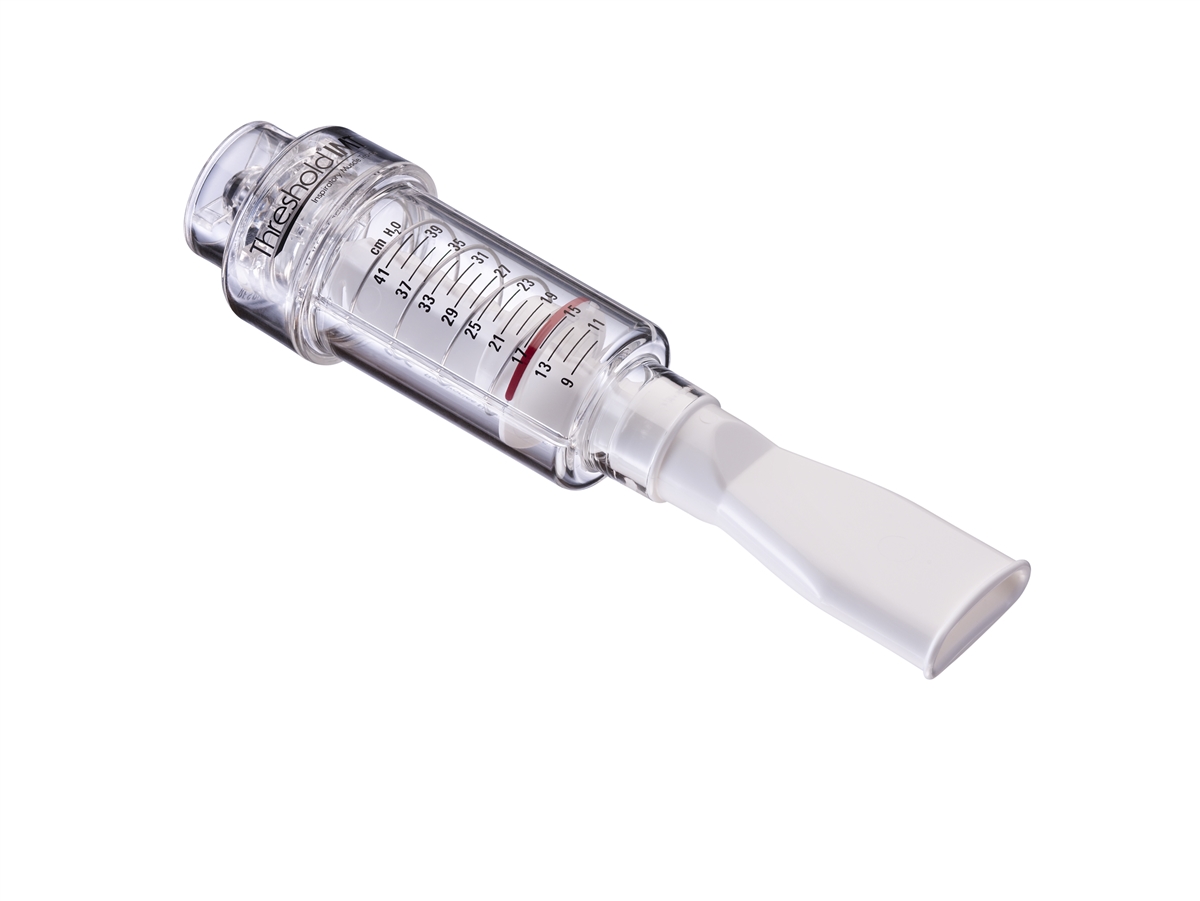
Why use an IMT device (like the Threshold pictured)?

  • Improve strength of cough for improved airway clearance (17.8 cmH2O improvement on average) –> This number is HUGE!!!
  • Improved diaphragm strength resulting in deeper inspiration for pneumonia prevention, especially in pre-CABG pts, with reduced hospitalization time after surgery
  • Functional improvements on 6 Minute Walk Test, QOL, and decreased difficulty with ADL for severe COPD patients

How to Use an IMT:

Two protocols have been found effective:

Repetitions to fatigue at 80% max of max effort once per day

OR

30 minutes of training at 60% effort twice per day

I’m going to say this one time so listen up: Just like ANY OTHER strengthening activity we prescribe, inspiratory muscle training intensities lower than 40% of maximal effort do not translate into quantitative functional outcomes.


I love to tell my patients that this is “lifting weights for your lungs!” Have you used any IMT techniques or tools in athletes or higher level patients? The evidence is growing in this, so let me know in the comments!

More from the Pulmonary Rehab Toolbox…

Venous Thromboembolism (VTE) Part 2: PEs

Thanks for tuning in to part 2 of this two-part feature of VTE. The first segment, which focuses on DVTs, can be found here! So now we are going to focus on the more critical version of a VTE. Yes, DVTs are critical. They are important to assess and treat quickly. But they are less…

Doctor B got tested for COVID-19!

No, I’m not sick or symptomatic or high risk or any of those things. As some of you know, after six years working home health, I recently transitioned to a long term care and skilled nursing setting. Governmental changes made testing mandatory for all providers, staff, and volunteers in these settings. I’m not going to…

The Counting Talk Test

Time to give you guys another tool. This one is especially important for patients with COVID-19, and it’s not terribly often that we get an objective measure for exertion. I’ve found the counting talk test to be critical in quantifying exertion in my patients with respiratory diagnoses. This measure is phenomenal for taking breathlessness in…

Something went wrong. Please refresh the page and/or try again.

Follow @DoctorBthePT on Twitter for regular updates!
References:

Valkenet, K, et al. (2016) Effects of a pre-operative home-based inspiratory muscle training programme on perceived health-related quality of life in patients undergoing coronary artery bypass graft surgery. Physiotherapy. In proof. https://doi.org/10.1016/j.physio.2016.02.007

Hang-Yu, C. et al. (2017) The effects of threshold inspiratory muscle training in patients with chronic obstructive pulmonary (COPD) disease: A randomized experimental study. J Clin Nurse. In proof. DOI: 10.1111/jocn.13841

Bisset, B. et al. (2016) Inspiratory muscle training to enhance recovery from mechanical ventilation: a randomised trial. Critical Care. In print. http://dx.doi.org/10.1136/thoraxjnl-2016-208279

Enright S, et al. (2011) Effect of inspiratory muscle training intensities on pulmonary function and work capacity in people who are healthy: a randomized controlled trial Phys Ther. 91(6):894-905

image credit

Need a Pick-Me-Up?

How about a freebie? Many companies are starting to offer freebies to healthcare workers of all kinds right now. They know we are struggling and they know we support them in crisis or not.

A freebie coffee, dozen donuts, meditation moment, or pair of shoes are just some of the options for all of us! Check out these links for information about freebies to help get you through your shift.

And please know that, when it feels like no one else cares, when you can’t get the PPE you need, and when it feels like the world is crashing down around you, I know you are still charging ahead. You are still seeing that patient, you are still going to that house, you are still performing those procedures. And these companies know it, too.

So thank you from me and from them.

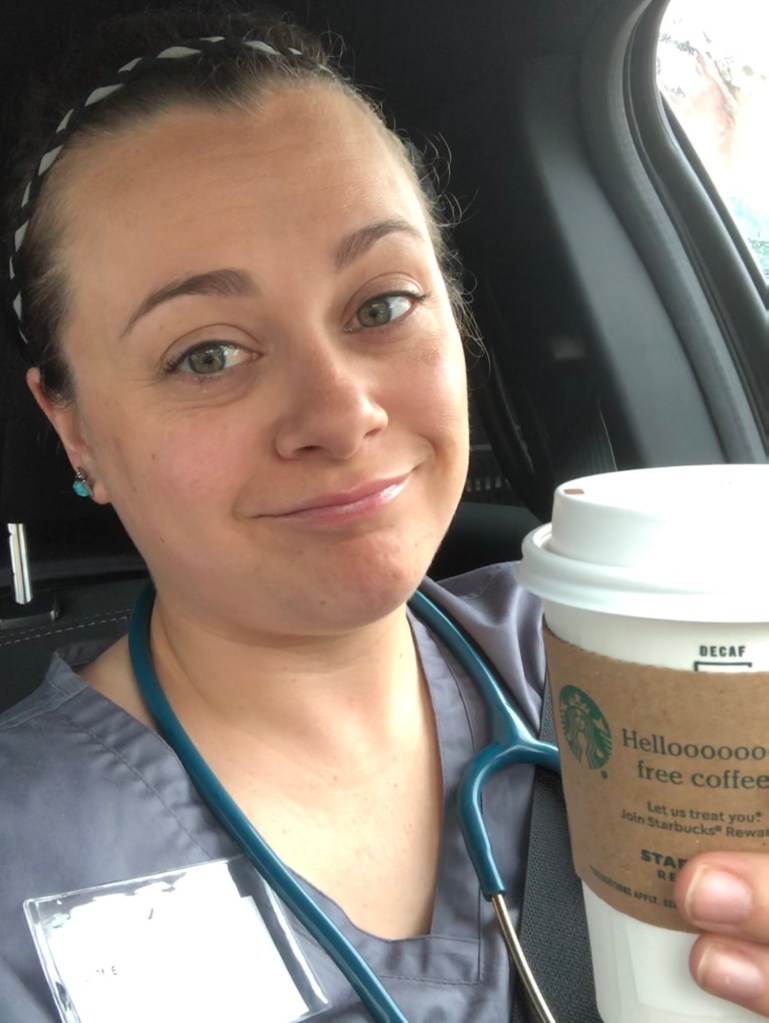
Starbucks is currently offering a free tall hot or iced coffee for all healthcare workers during open hours at all open locations. I don’t know about you, but this is my life blood. Here is a picture of me with one of my free ones!

Here is me with mine!

Maybe coffee isn’t your thing. And that’s fine, although, I don’t know how you get through your day… Maybe you use a perfectly acceptable substitution: donuts!

Krispy Kreme is offering free dozen donuts to healthcare workers. This offer is available every Monday until May 11, which is the conclusion of national nurses week. My office has definitely had a few boxes of these showing up from week to week.

And yet, maybe donuts aren’t your thing either! Although now, I really question your motives…

If you are looking for a calm in the storm, a break from the crazy, or a moment of quiet inside of your head, headspace is offering free memberships for all healthcare workers and associated professions. The easiest way to do this is to enter your NPI number, but you don’t have to have one to get the free membership. You just need to fill out an affidavit. Check out this link for registration

HeadSpace: https://help.headspace.com/hc/en-us/articles/360045161413-Headspace-for-Healthcare-Professionals

And who doesn’t want a pair of shoes???

Crocs is offering a free pair to heath are providers. They may not be exactly your style, but they are easy to wipe down, light weight, and surprising comfortable for most people.

Crocs

And, at the very least, gas up on your way to work this morning with a coupon from BP. BP is currently offering $.50 off per gallon of gas for healthcare workers. You have to register and be identified through ID.me, but the coupon is good until the end of May.

BP Gas Coupon

If none of that does it for you, but you are in to fashion, The North Face is offering HUGE discounts to health care workers! Maybe Crocs just are too cool for you are you are looking for something more mainstream?

The North Face

Still not in to it? Ok, if you’re driving to work, you probably need an oil change or a car cleaning at some point. Mazda is offering free services to health are workers, regardless of what car they drive! Check it out:

Mazda

Again, thank you, no matter who you are or what you do. You matter.

If you know of any other freebies for healthcare workers, let me know in the comments!

Altitude Medicine: Rehab at the Peak

I took a trip to Denver recently and, right around the same time, was consulted regarding the use of a pulse oximeter at high altitudes. It all got me thinking: how different could it really be to practice at 9,000ft? So, I did some work on this and I have to tell you, finding this…

Emergency Response Screening

I hope, at this point, you’ve all heard of the FAST acronym for identifying signs of a cerebrovascular accident (aka stroke). My in-laws even have a magnet on their fridge with a great comic strip describing the FAST acronym. I have run in to a couple different versions of it in the last few years,…

Follow @DoctorBthePT on Twitter for regular updates!